

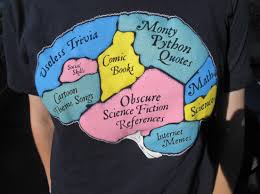
I’ve made mention many times in class and in posts that my definition of literacy at the beginning of this class was strictly related to written text–reading and writing. It didn’t occur to me to use the term “literacy” as applied to other medias and skills.
Our readings have at times evoked strong reactions that I was surprised to feel over required assignments. A lot of frustration came out of reading the inherent racism of Goody and Watt’s assertions. I was bored with the minutiae of Kaestle’s studies on literacy practices and skills across regions and generations. Scribner’s breakdowns of the uses of literacy (as salvation, as power, as adaptation) seemed both encompassing and simplistic.
Everything we consumed made me wonder…why can’t I just do and be done and show the solution without all the work?
Ignoring the obvious reason that this is a class designed to unpack our facts/assumptions about literacy skills and standards, I maintained a nagging feeling throughout the quarter that not enough light was being shed on what to do moving forward. I even almost did a project on it: what does an idealistic literacy agenda look like? I don’t know that I could’ve answered that.
I’ve always loved to read, but like most, the act of writing gives me anxiety. It took me a while to come around to getting into the habit of writing, and that was only because of a teacher who patiently explained that, “A writer writes.”
With this mindset and thinking about everything we’ve read, I think that having to standardize and label literacy practices is useful to a very short point before it becomes excluding to the majority of people. Perhaps the best way for those not studying the subject to ignite an interest in developing literacy skills is just to do them–all of them: traditional/universal (reading/writing), idealistic (incorporating features of orality), and functional. By exposing audiences to a full scale of literacy skills and practices, each learner can choose to expand on those that are most applicable. Think writing is important? Be a writer, write, and make the skill important in your life so that its relevance resonates to others.
Monkey see, monkey do, right?


